
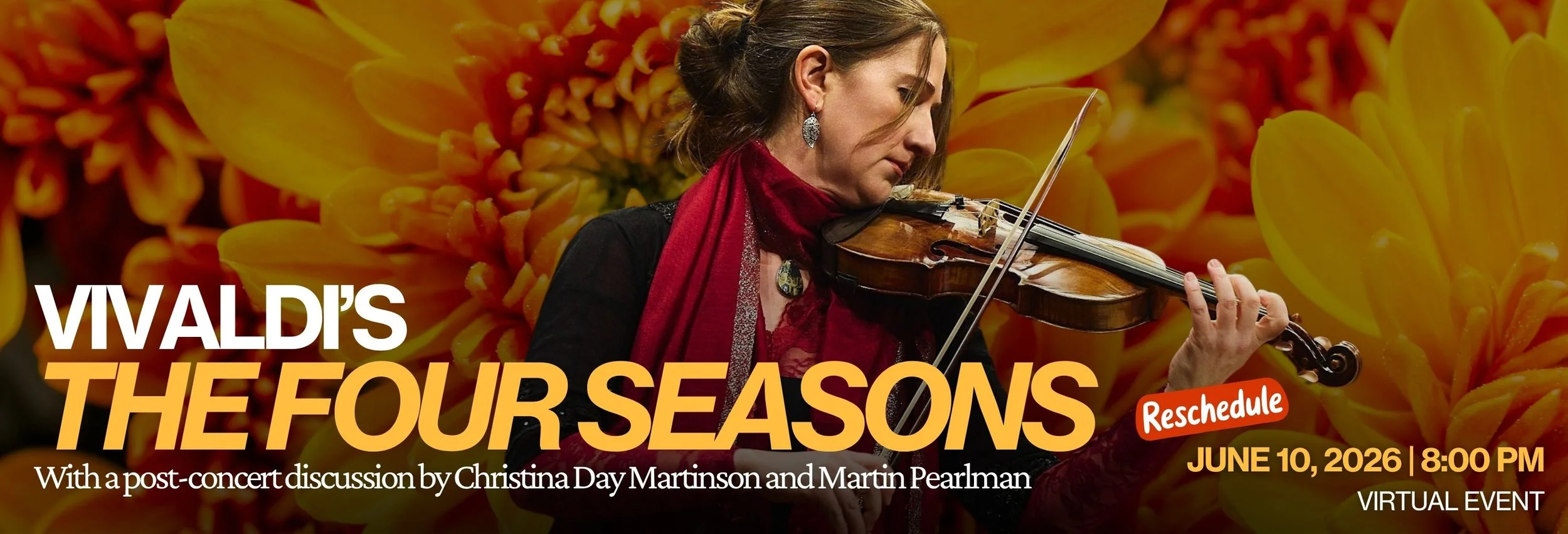
Wednesday
June 10 at 8:00 PM
(TICKETS NO LONGER FOR SALE)
2025-26 Season > Vivaldi’s The Four Seasons: A Virtual Concert Experience
LINKS FOR TICKET HOLDERS
WATCH NOW THE FULL STREAM BELOW
(AVAILABLE TO WATCH UNTIL JUNE 30)
WATCH LIVE Q&A BELOW ON JUNE 10 at 8PM EST
(AVAILABLE TO WATCH UNTIL JUNE 30)
PROGRAM
Concerto grosso, Op. 5, No. 4
Francesco Geminiani (1687-1762)
Silente venti, HWV 242
George Frideric Handel (1685 -1759)
Le Quattro Stagioni (The Four Seasons)
Antonio Vivaldi (1678 - 1741)
ESTIMATED RUN TIME
2 HRS | Virtual Stream
30 MIN | Live Q&A session
Experience one of the most beloved works in classical music in this special digital watch party presented by Boston Baroque. This event features a live reshowing of the program originally performed in March 2024, pairing Vivaldi’s iconic Le quattro stagioni "The Four Seasons" with vibrant Baroque works by Handel and Geminiani.
The program includes Geminiani’s Concerto grosso, Op. 5, No. 4; Handel’s evocative soprano aria Silente venti, HWV 242, sung by Amanda Forsythe; and Vivaldi’s Le quattro stagioni "The Four Seasons", performed by Christina Day Martinson, violin.
Following the concert, audiences are invited to stay for live commentary and conversation with Boston Baroque Founder Martin Pearlman and Concertmaster and Associate Artistic Director Christina Day Martinson, offering behind-the-scenes insights into the music, the performance, and the enduring power of The Four Seasons.
Only one ticket is needed per household, but if you’re able, we invite you to make a donation.
Gifts from supporters like you help us bring more amazing performances to the community, because ticket sales alone don’t cover everything we do. Every contribution truly makes a difference.
ARTISTS



COMPOSERS

Francesco Geminiani (1687-1762)
Born in Lucca, Francesco Geminiani (1687–1762) was one of the most influential violinists and composers of the Baroque era. A student of the legendary violinist and composer Arcangelo Corelli, Geminiani carried the Italian concerto tradition across Europe, eventually settling in London where he became known for his expressive violin playing and influential writings on performance practice.
His Concerto Grosso in D minor, Op. 5, No. 4 is part of a remarkable set of concerti grossi that transform Corelli’s famous violin sonatas into works for full ensemble. Expanding the intimate sonata into a dialogue between a small group of soloists and the larger orchestra, Geminiani heightens the drama with rich textures, expressive ornamentation, and bold harmonic color. The result is music that retains Corelli’s elegance while amplifying its emotional scope—showcasing the vibrant interplay that defines the concerto grosso style at its most imaginative.

George Frideric Handel (1685 -1759)
Born in Halle, George Frideric Handel (1685–1759) was one of the most celebrated composers of the Baroque era. Trained in Germany and later active in London, Handel built an international career writing operas, oratorios, orchestral works, and virtuosic vocal music. His dramatic instinct and gift for melody made him one of the defining musical voices of the 18th century.
The cantata Silente venti, HWV 242 reflects Handel’s mastery of the Italian vocal style that shaped much of his early career. Written for soprano and orchestra, the work unfolds in a sequence of expressive recitatives and dazzling arias. Its opening image of “silent winds” gives way to music filled with brilliant vocal writing and emotional contrasts, allowing the singer to move from lyrical calm to virtuosic display. The cantata captures Handel’s ability to blend theatrical drama with elegant Baroque lyricism, creating a miniature showcase of his vocal artistry.
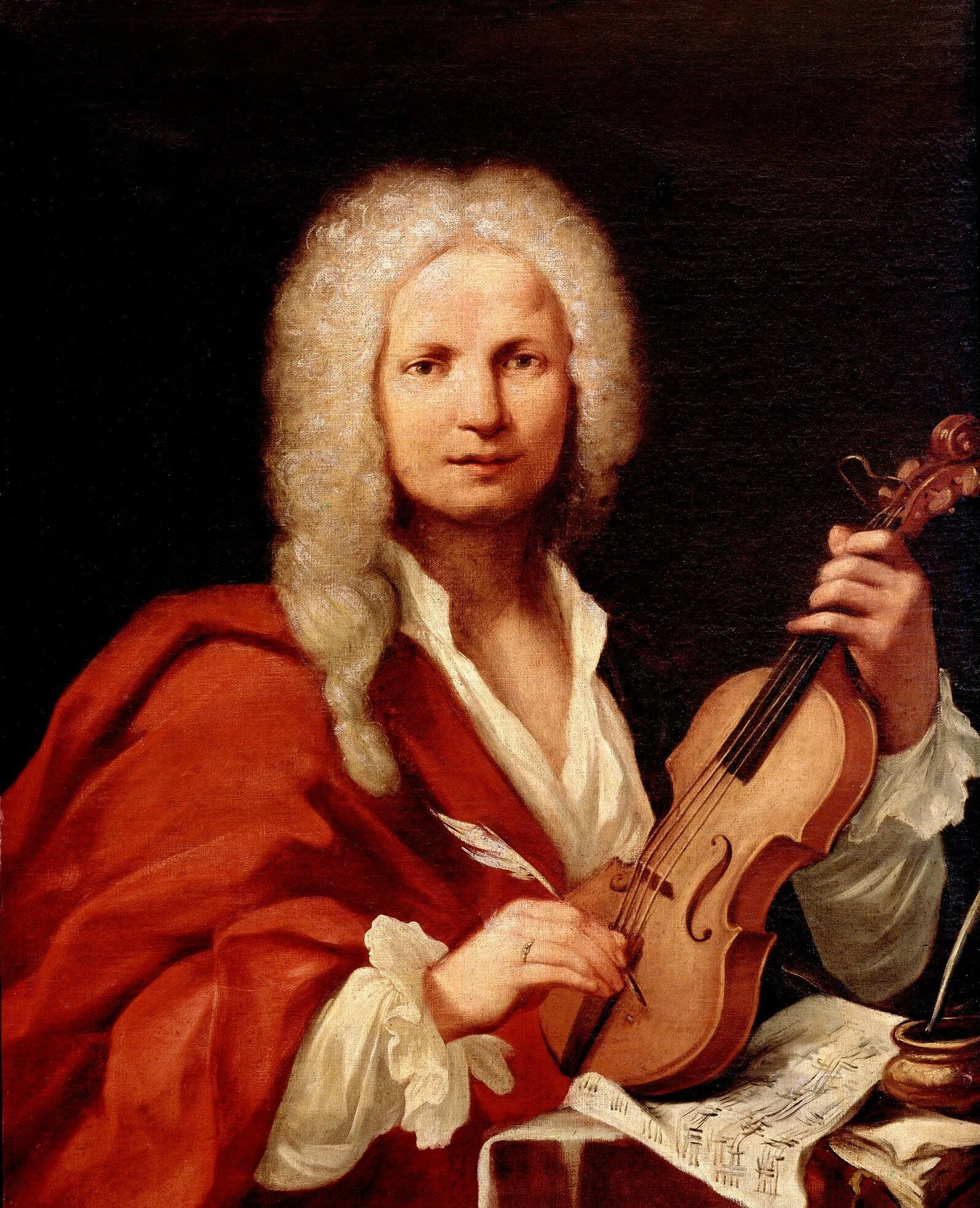
Antonio Vivaldi (1678 - 1741)
Born in Venice, Antonio Vivaldi (1678–1741) was one of the most imaginative and prolific composers of the Baroque era. A virtuoso violinist and teacher at the Ospedale della Pietà, Vivaldi wrote hundreds of concertos that helped define the form, shaping the sound of orchestral music across Europe with his vivid rhythms, bold harmonies, and expressive violin writing.
His most famous work, The Four Seasons, is a set of four violin concertos that vividly portray the changing seasons: Spring (The Four Seasons), Summer (The Four Seasons), Autumn (The Four Seasons), and Winter (The Four Seasons). Each concerto is paired with a poetic sonnet—likely written by Vivaldi himself—that guides the music’s imagery, from birdsong and flowing streams to summer storms and icy winds. Through sparkling violin passages and colorful orchestral effects, Vivaldi transforms the natural world into sound, creating one of the most vivid and enduring works in the Baroque repertoire.